
The 3 Most Anticipated Hypercars Coming in 2026
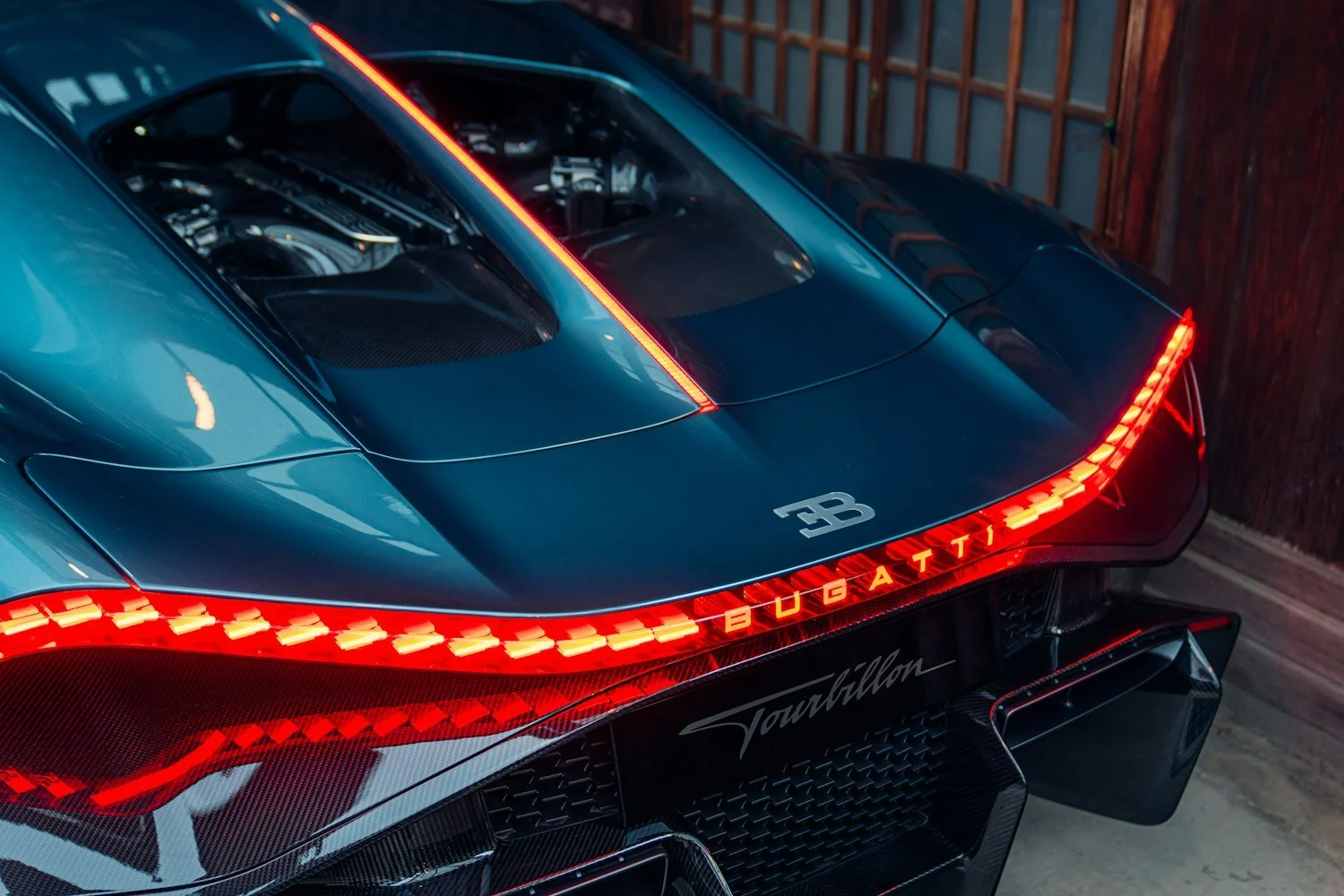
Image: Bugatti Automobiles S.A.S.
Chapter 1: A Breakthrough Year for the Hypercar Industry
The year 2026 is shaping up to be one of the most decisive turning points the hypercar world has seen in more than a decade. After years of rapid technological evolution, regulatory pressure, and shifting market dynamics, the segment is entering a new phase defined by extreme innovation rather than pure displacement or brute-force engineering. What makes 2026 so unique is the convergence of three major forces: the maturity of high-density hybrid systems, the first truly credible all-electric hypercars designed for repeatable performance, and a renewed commitment by legendary manufacturers to push well beyond their historical boundaries.
For the first time, every major player at the top of the market—Bugatti, Koenigsegg, Rimac, Lotus and Ferrari—is launching or heavily advancing a flagship model in the same timeframe. This alignment is rare. Traditionally, hypercar releases are staggered across years, with major debuts separated by long product cycles. In 2026, however, the industry is experiencing a synchronized leap, driven by massive R&D investment and intense competitive pressure. Each manufacturer is under scrutiny to deliver not just speed, but a technological statement piece capable of defining an era.
Hybrid systems are reaching maturity in ways that were simply not possible ten years ago. The combination of high-revving combustion engines with compact, torque-rich electric motors is enabling power outputs that once seemed unrealistic outside theoretical engineering discussions. Bugatti’s Tourbillon—set for first customer deliveries in 2026—is the clearest example: a naturally aspirated V16 paired with a tri-motor electric system. It signals the end of the quad-turbo era and the beginning of a new engineering philosophy, one centered on efficiency, precision and mechanical purity enhanced by electrification.
At the same time, the electric-only sector is no longer in its infancy. Rimac’s transition toward its Nevera successor will mark the first generation of EV hypercars designed from day one for track consistency rather than peak-number marketing. Battery cooling, inverter efficiency and torque vectoring strategies are advancing fast enough to make the next wave of EV hypercars credible alternatives—not just technological showcases.
Meanwhile, Ferrari and Lotus represent two opposite ends of the tradition-versus-innovation spectrum. Ferrari’s first fully electric model is expected to be a landmark moment for Maranello, while Lotus continues evolving the Evija platform with ultra-limited high-output variants.
In short, 2026 isn’t just another model year. It represents a collective step forward—where engineering ambition finally meets technological readiness, and the hypercar industry enters a new competitive golden era.
Number 1: Bugatti Tourbillon – The V16 Hybrid Titan Arrives
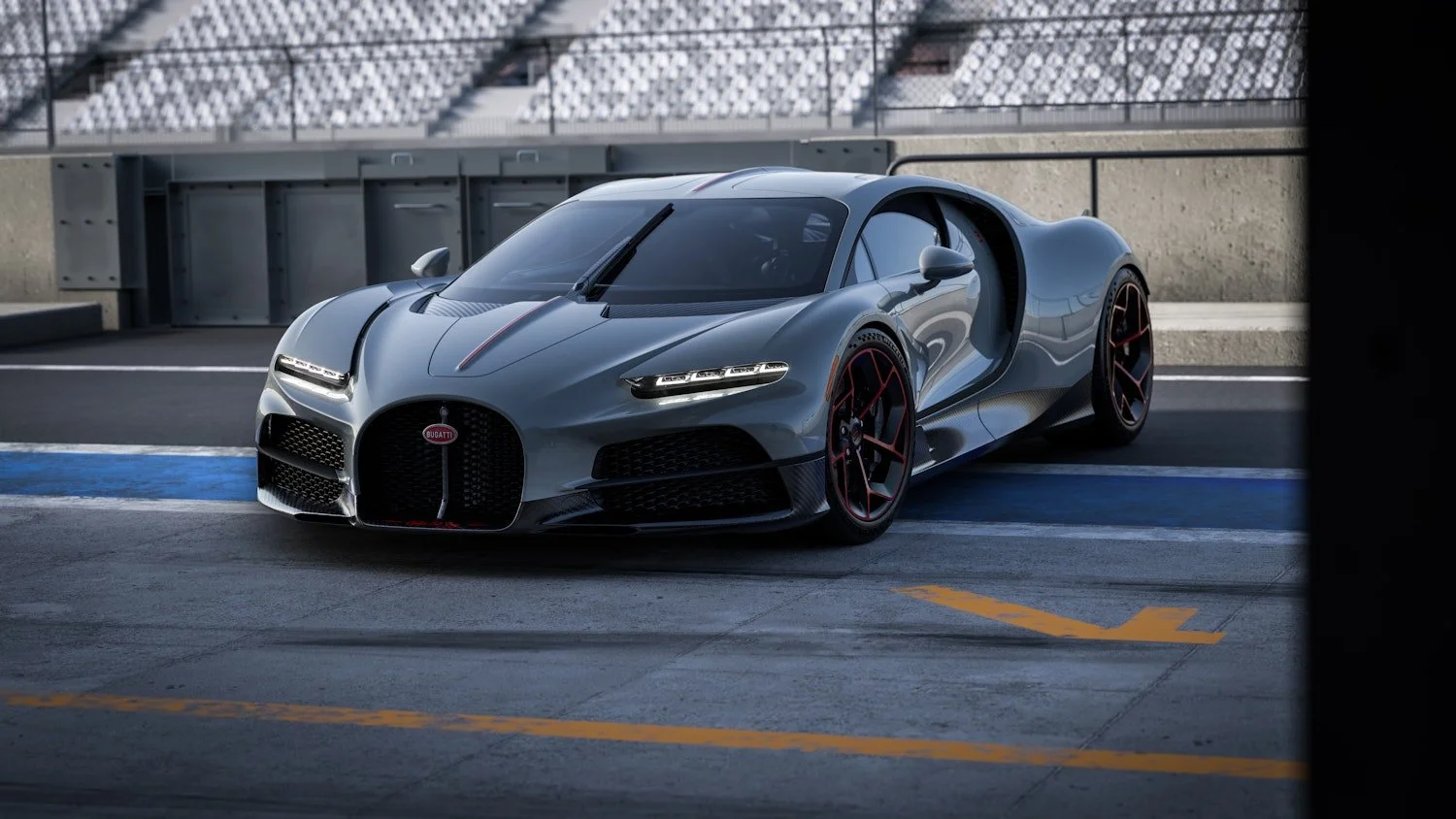
Image: Bugatti Automobiles S.A.S.
The Bugatti Tourbillon is unquestionably the most anticipated hypercar of 2026 — and for good reason. It represents the single most radical engineering pivot in the company’s modern history. After two decades of W16 dominance across the Veyron and Chiron generations, Bugatti has abandoned forced induction entirely and moved to a naturally aspirated V16 paired with an advanced three-motor electric system. This is not a facelift, not an evolution, but a complete redefinition of what a Bugatti hypercar is supposed to be. The Tourbillon is the technical and philosophical reset that will guide the brand for the next decade.
The centerpiece is the new 8.3-liter V16 engine, developed with Cosworth, engineered to rev beyond 9,000 rpm, and designed with a purity of response that turbocharged units cannot match. The decision to go naturally aspirated was deliberate: Bugatti wanted instant throttle feedback, a linear powerband and an emotional character reminiscent of motorsport engines — but in a hypercar designed for road use. This combustion unit alone produces over 1,000 horsepower. When combined with the three electric motors — one driving the rear and two driving the front wheels — the system output exceeds 1,800 horsepower. The result is a hybrid powertrain that does not use electrification merely to fill torque gaps, but to elevate the car into an entirely new performance category.
Performance figures have not been fully disclosed, but internal targets make it clear the Tourbillon will surpass the Chiron Super Sport in every measurable area: acceleration, elasticity, top speed stability and aerodynamic efficiency. What separates it from earlier Bugatti models, however, is its expected repeatability. The hybrid system enables far more consistent acceleration runs, stability out of slow corners and improved traction thanks to instantaneous electric torque vectoring. Instead of simply overpowering the competition, Bugatti is engineering a platform capable of precision at the absolute limit.
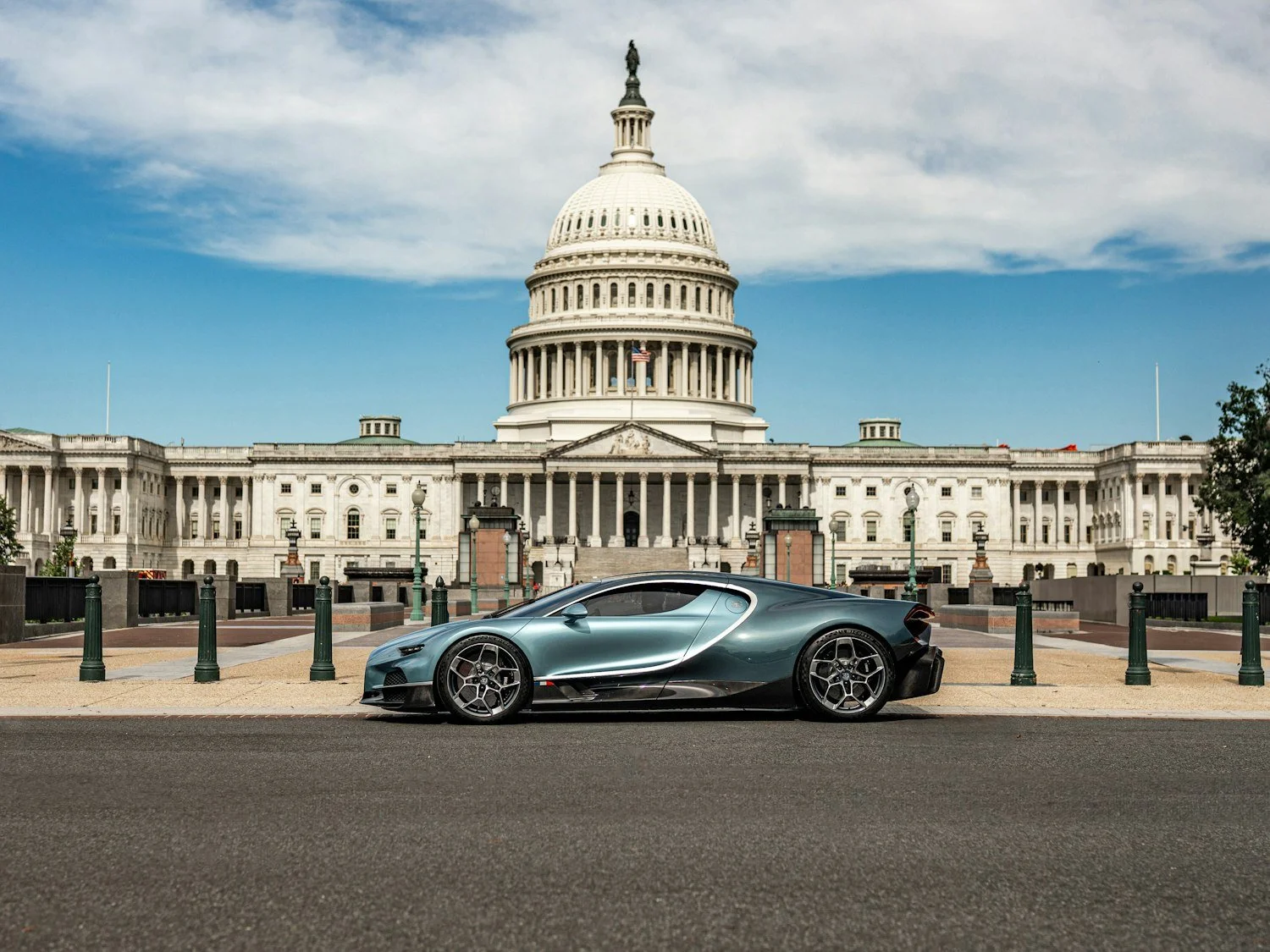
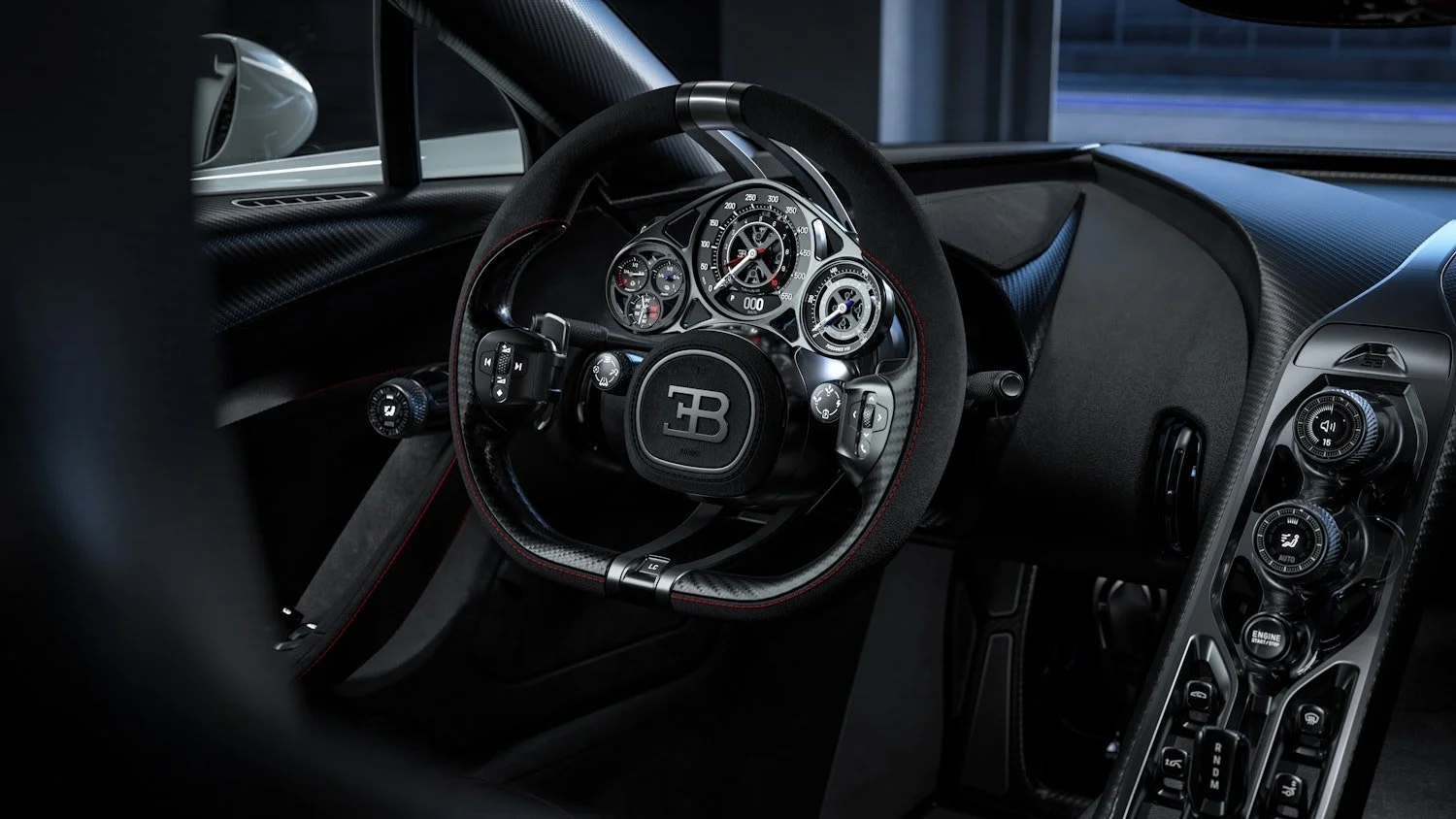
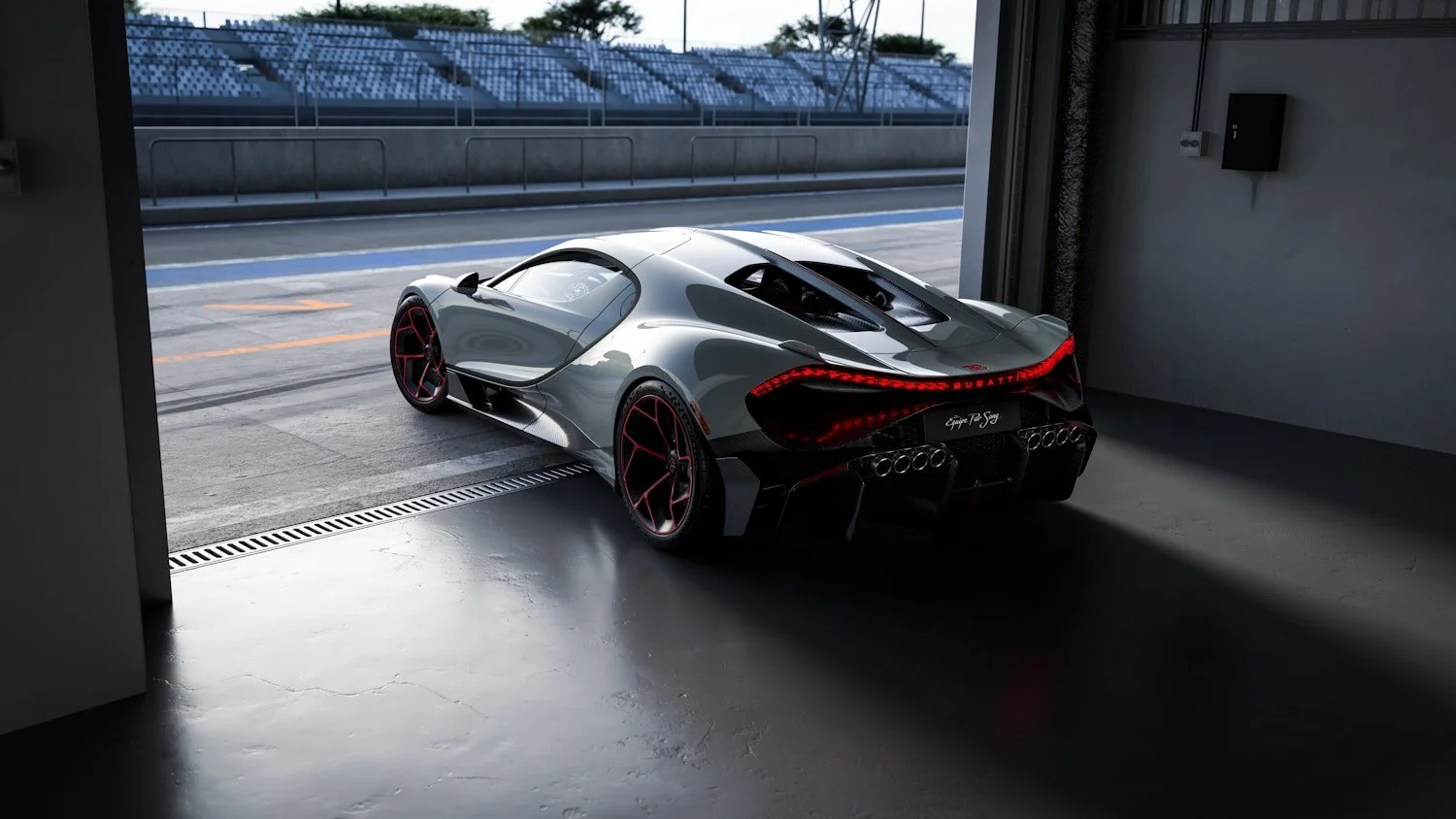
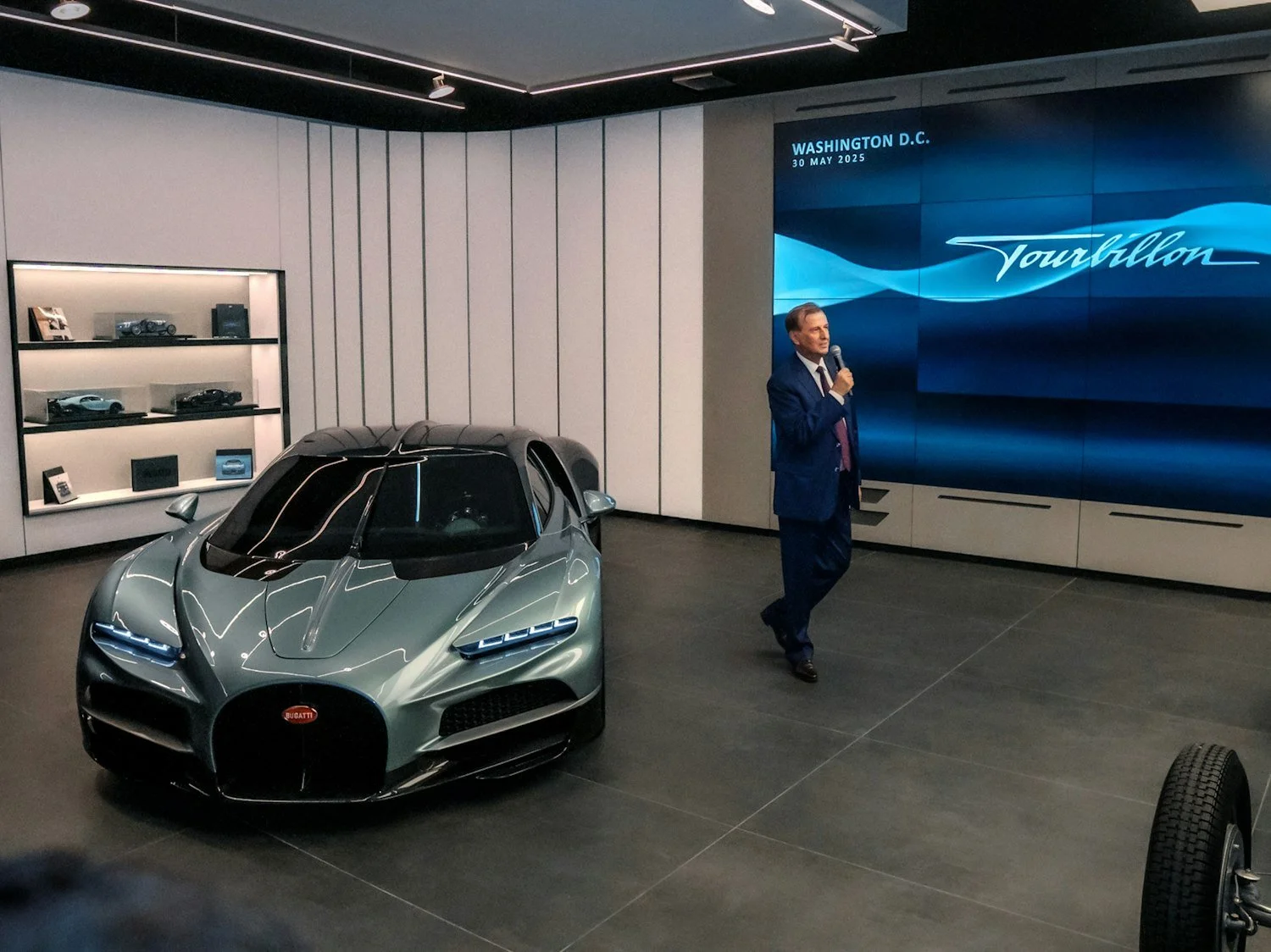
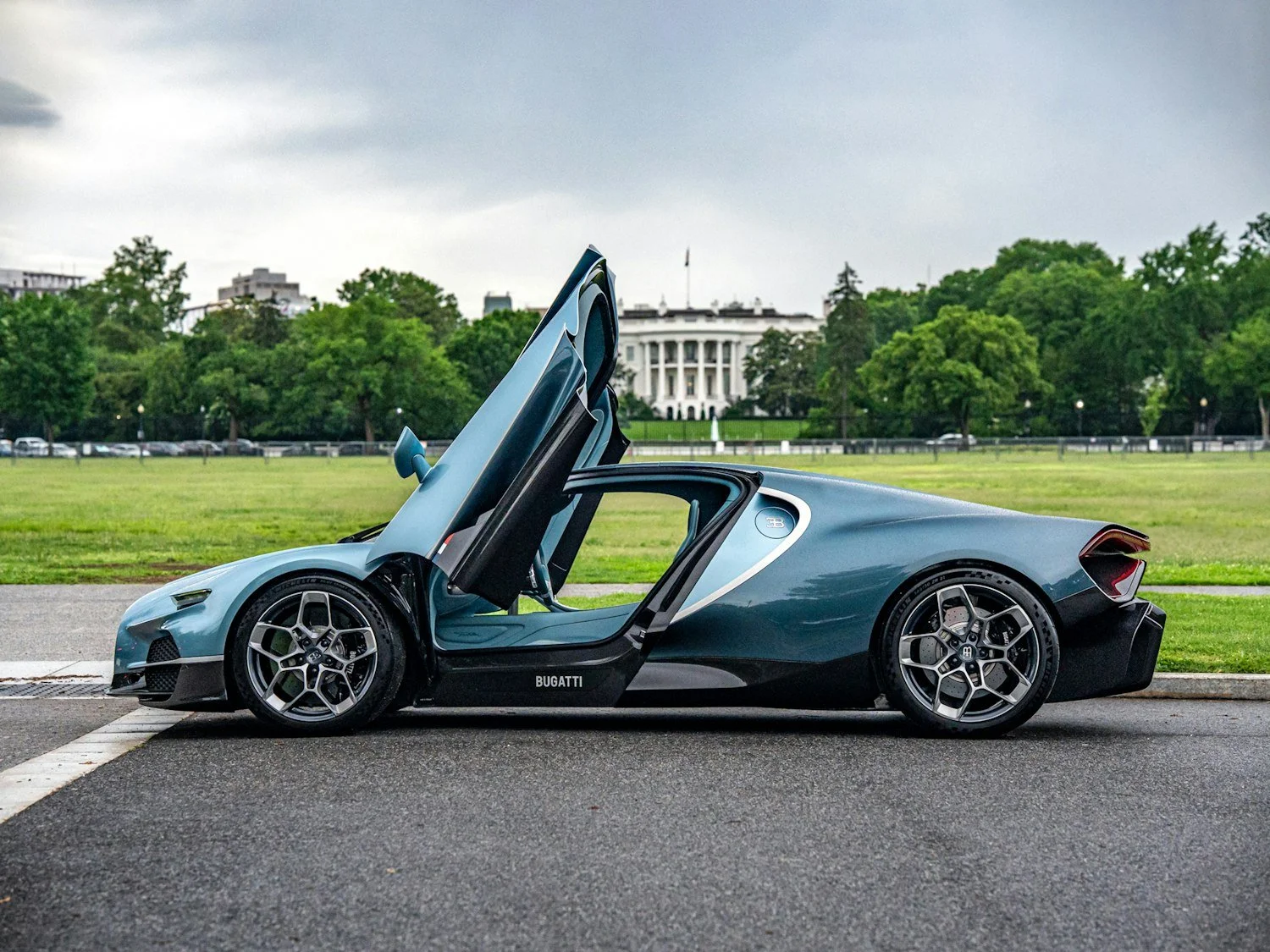
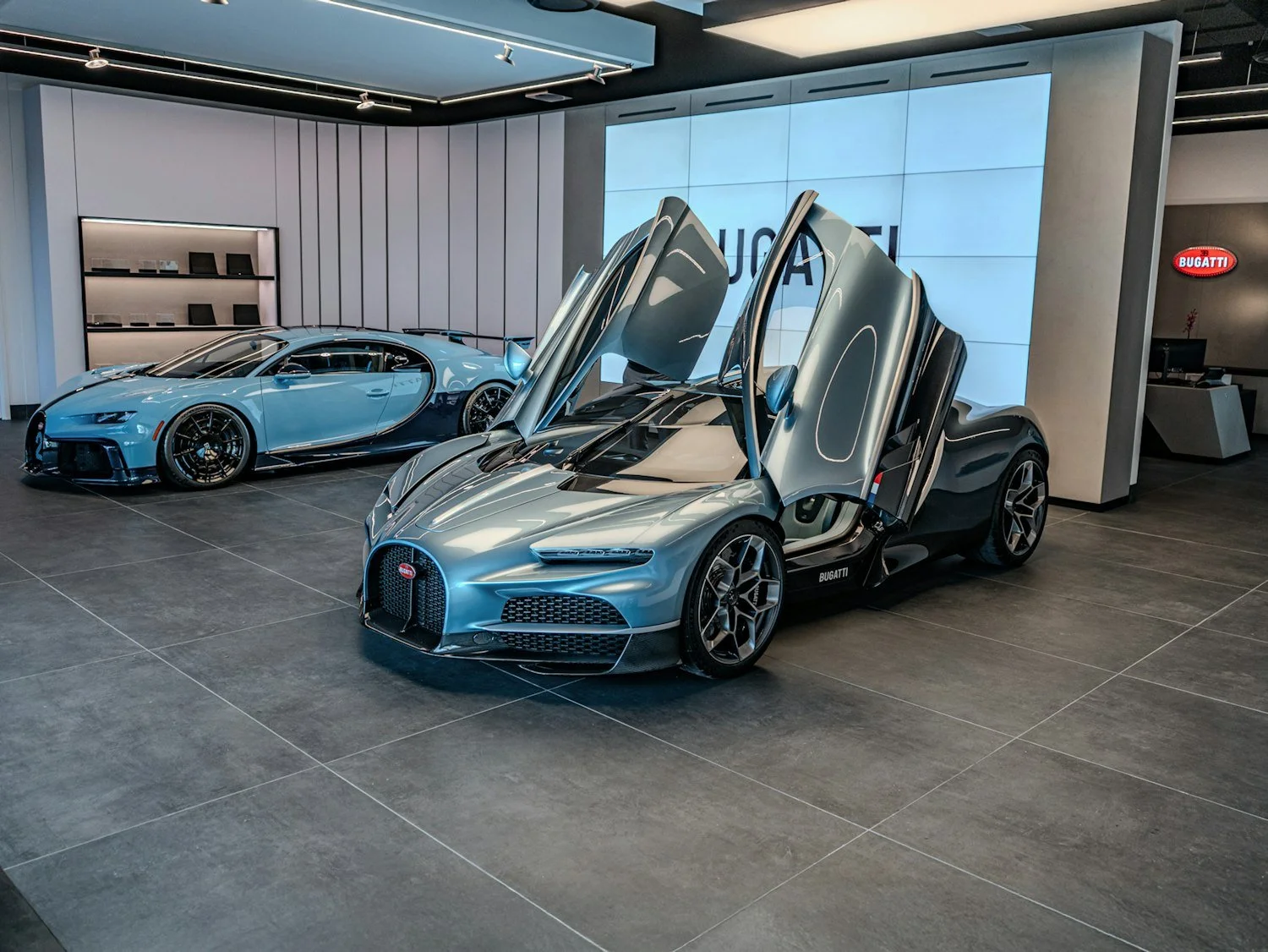
Image: Bugatti Automobiles S.A.S.
The chassis reflects this shift in philosophy. The monocoque has been redesigned to accommodate the elongated V16 and its electric driveline components without compromising rigidity. Weight management has been an obsession during development; despite the hybrid system, Bugatti’s target curb weight remains competitive thanks to extensive use of carbon composites, lightweight cooling architecture and optimized battery packaging. Aerodynamics play an equally crucial role. The Tourbillon uses active aero surfaces, redesigned underbody channels and a more efficient rear diffuser to reduce drag while maintaining extreme high-speed stability.
The interior design is another defining element. Bugatti avoided digital overload entirely. Instead, the Tourbillon features a mechanical instrument cluster with hand-built analog mechanisms — a direct response to the increasingly screen-dominated automotive world. This reinforces the brand’s desire to create a timeless object, one that will remain emotionally relevant even decades from now, long after modern infotainment systems become obsolete.
What elevates the Tourbillon further is its symbolism. It marks the beginning of the Rimac-Bugatti partnership’s true technological era, where the mechanical artistry of Bugatti meets the electric expertise of Rimac. The Tourbillon is the culmination of this merger: part heritage, part future. It demonstrates that Bugatti is not interested in building EVs for the sake of compliance but aims to create hybrid machinery that blends emotional combustion with cutting-edge electrification.
In 2026, the Tourbillon will not simply be another hypercar release — it will be the benchmark against which all other manufacturers must measure themselves. It is the definitive statement of what a next-generation hybrid hypercar can be when engineering ambition is matched with limitless resources and uncompromising philosophy.
Number 2: Koenigsegg Gemera – The Wildest Four-Seater Ever Goes Full Production
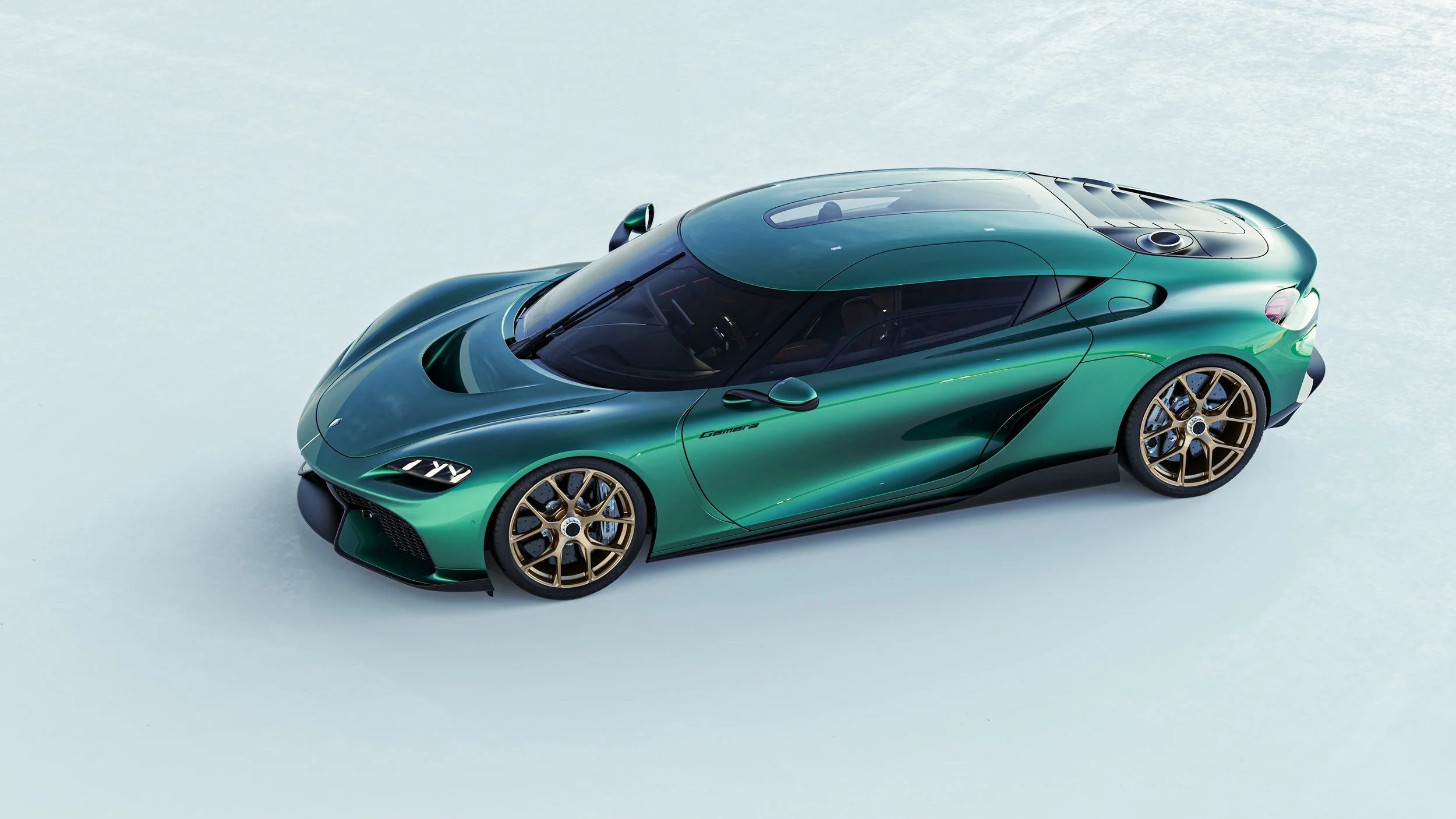
Image: Koenigsegg Automotive AB
The Koenigsegg Gemera HV8 is arguably the most disruptive hypercar heading into 2026, not only because of its staggering numbers but because of what it represents: the world’s first true four-seat megacar with performance that challenges — and in some metrics surpasses — the most extreme two-seat hypercars on the planet. When Christian von Koenigsegg announced the HV8 configuration, replacing the original three-cylinder “Tiny Friendly Giant” hybrid concept, it became immediately clear that Koenigsegg had no intention of compromising. The HV8 is the brand’s unfiltered approach to building the ultimate grand touring hypercar, prioritizing power, innovation and exclusivity in equal measure.
At the heart of the Gemera HV8 lies Koenigsegg’s latest evolution of its 5.0-liter twin-turbo V8, an engine that has consistently pushed the boundaries of internal combustion. In the Gemera, this V8 is paired with the Dark Matter electric motor — an ultra-compact, high-output unit that delivers massive electric torque while drastically simplifying the drivetrain layout. Together, the system produces up to 2,300 horsepower, depending on the configuration. These numbers are not marketing exaggerations; they stem from Koenigsegg’s obsession with mechanical efficiency, lightweight design and innovative power delivery systems.
One of the Gemera’s most significant advancements is the introduction of the Koenigsegg’s patented Light Speed Tourbillon Transmission (LSTT), a new iteration of the company’s highly unconventional gearbox philosophy. The LSTT allows for near-instantaneous gear changes and enables the car to extract maximum performance from both the V8 and the electric motor without the compromises associated with traditional hybrid drivetrains. This system is designed to handle extreme torque loads while remaining lighter and more compact than many conventional transmissions.
The HV8’s platform pushes beyond traditional hypercar engineering boundaries by combining extreme performance with a genuinely usable four-seat cabin. The monocoque is designed to accommodate adult passengers in the rear seats, a trait unheard of in this segment. The large dihedral synchro-helix doors provide unobstructed entry for all occupants, a signature Koenigsegg trait that blends practicality with dramatic engineering flair. Despite its capability to carry four adults, the Gemera maintains a curb weight and stiffness profile remarkably close to pure two-seat hypercars, thanks to precise carbon optimization and structural efficiency.

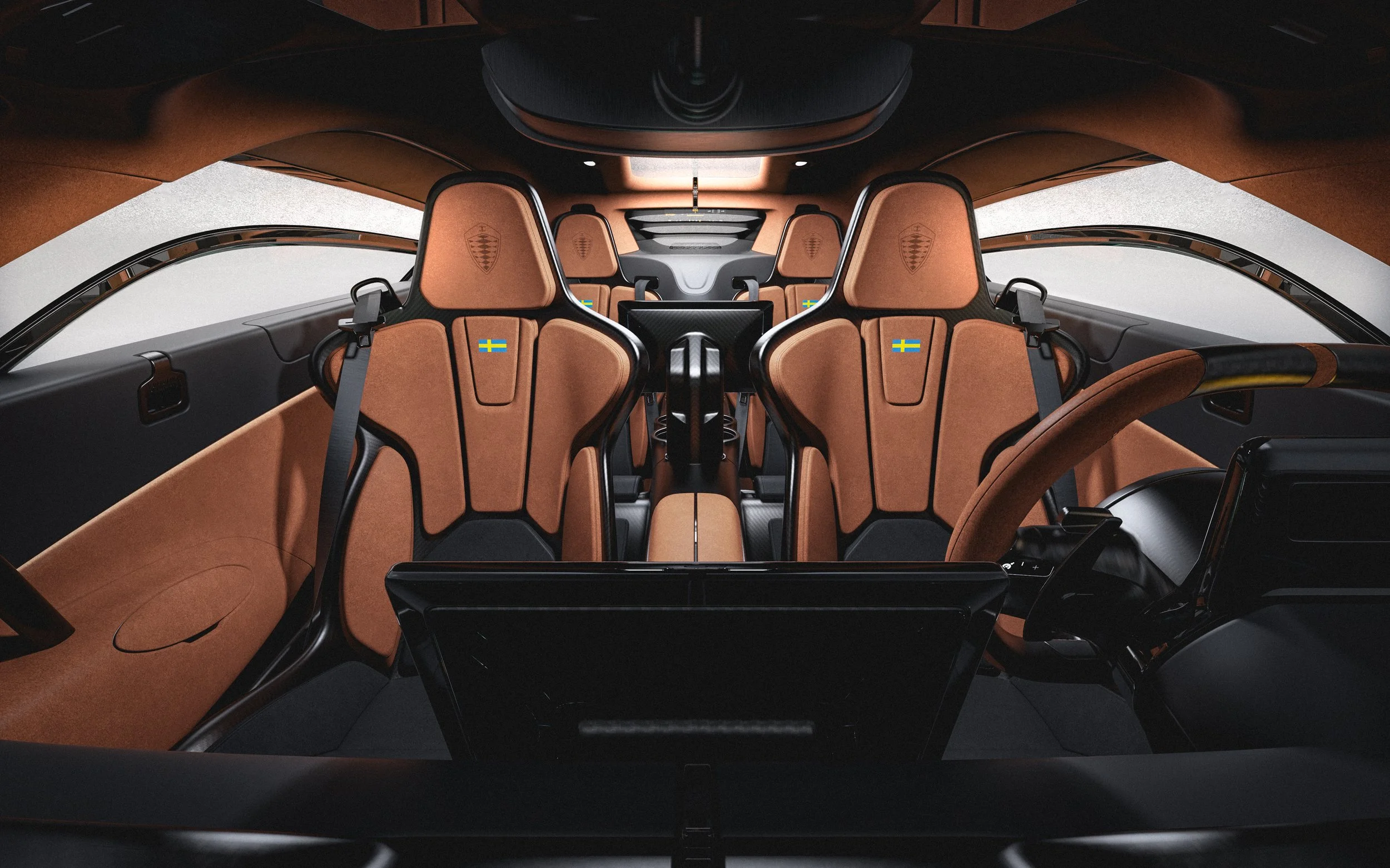
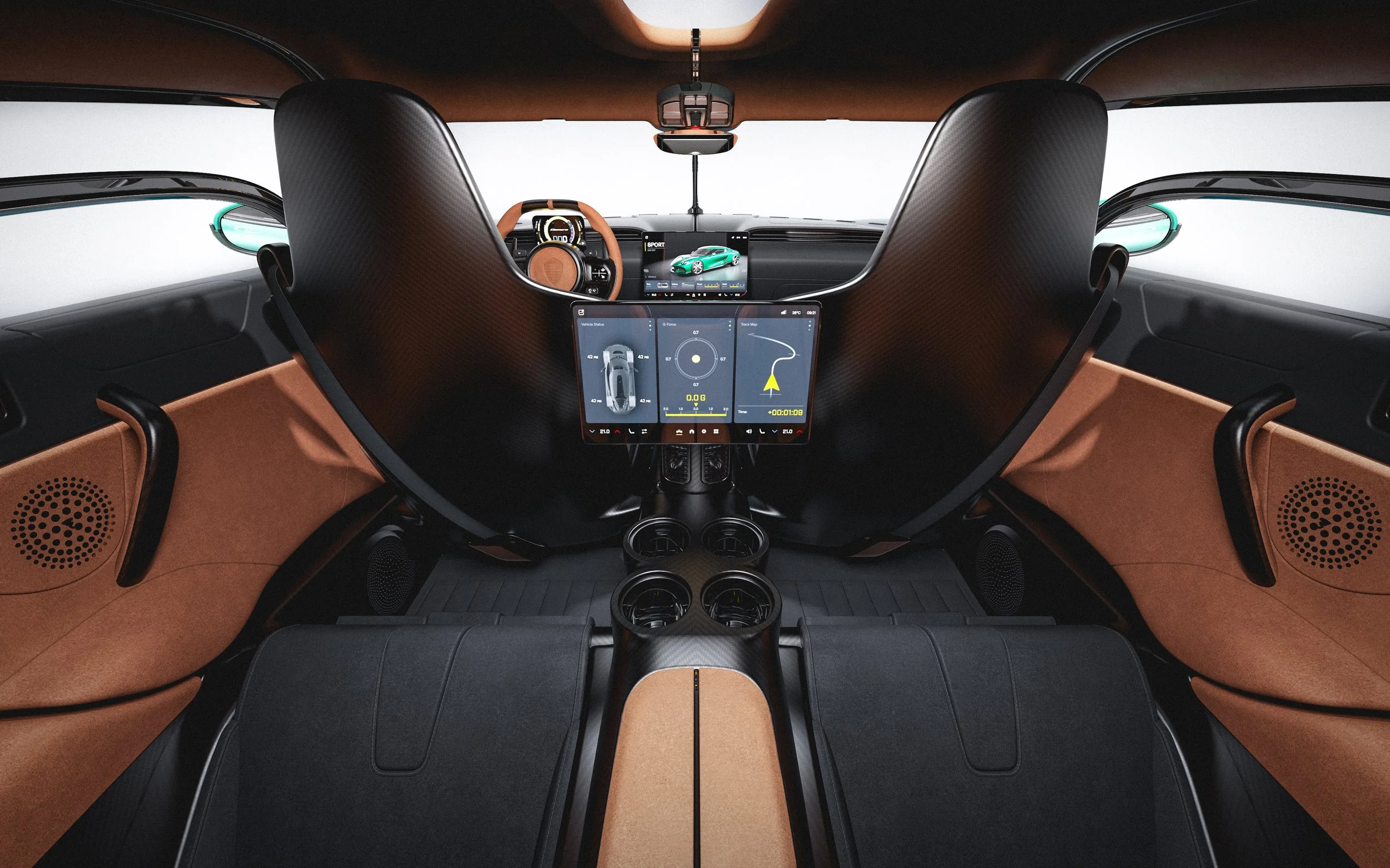
Image: Koenigsegg Automotive AB
Thermal management is another critical area where Koenigsegg excels. The HV8’s power levels create enormous heat loads, especially when the V8 and electric motor operate at full output. Koenigsegg’s cooling system — which includes advanced radiators, optimized airflow channels and a carefully designed exhaust layout — ensures consistent performance during aggressive driving. This focus on repeatability aligns the Gemera with Koenigsegg’s philosophy of producing cars capable of delivering extreme performance runs without suffering from heat-induced degradation.
From a driving dynamics standpoint, the Gemera HV8 aims to deliver stability and agility that belie its size. The torque vectoring system, active damping, rear-wheel steering and advanced traction control collectively create a driving experience that blends GT comfort with hypercar precision. It is engineered to be as comfortable on long European highway stretches as it is devastatingly fast on a track straight.
In essence, the Gemera HV8 is not merely a technical object; it is a statement of intent. Koenigsegg is proving that practicality and extreme performance are not mutually exclusive. By merging megacar power with real-world usability, the Gemera HV8 stands apart as the boldest interpretation of what a 2026 hypercar can be. It challenges the industry norm and expands the definition of what enthusiasts can expect from the next generation of high-performance vehicles.
Number 3: Zenvo Aurora – Denmark’s 2026 Hypercar with the „Mjølner“ V12 Powertrain
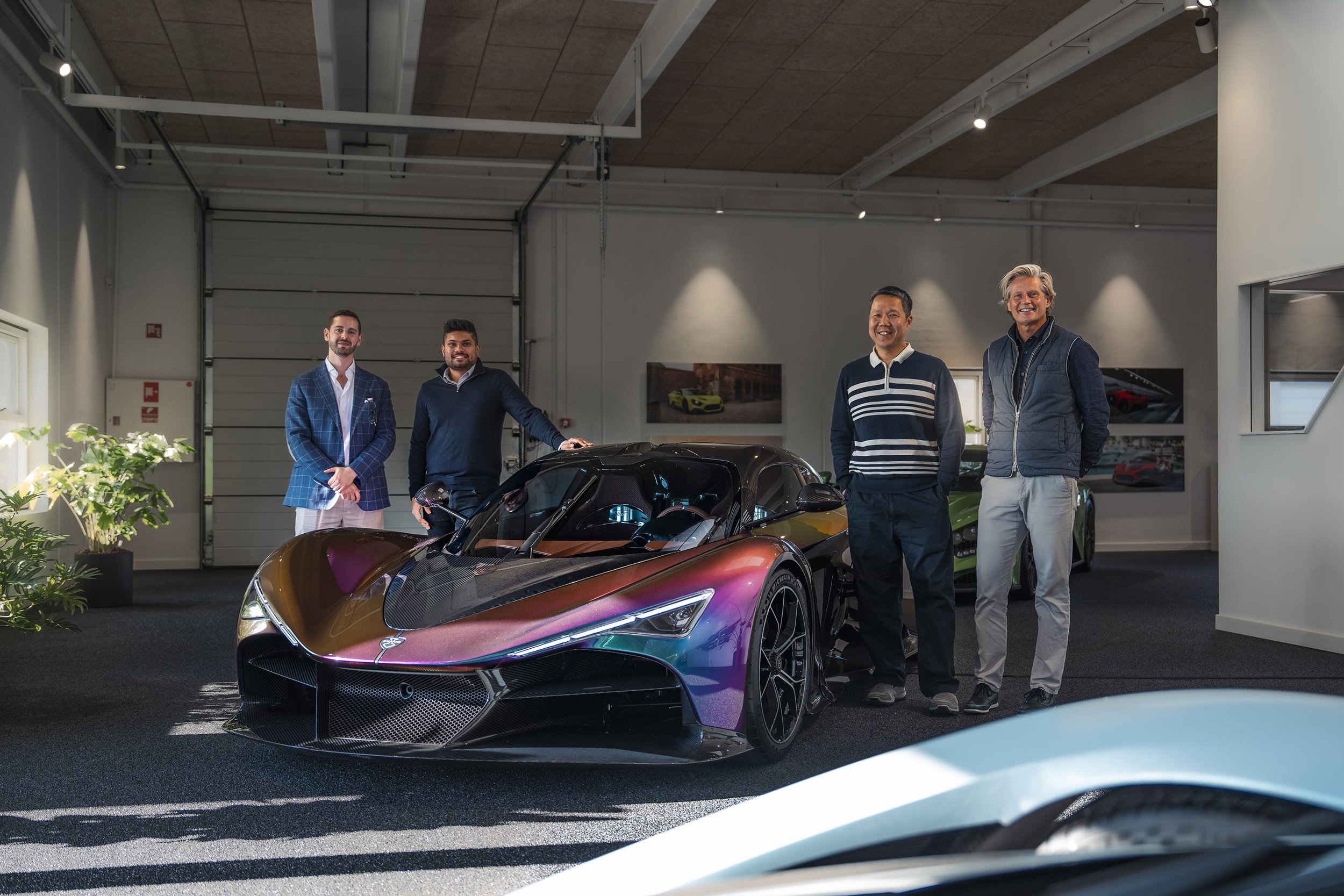
Image: newspress.uk
The Zenvo Aurora emerges as one of the most serious contenders for the 2026 hypercar crop — and possibly the only European newcomer alongside giants like Bugatti, Koenigsegg and Ferrari. What makes the Aurora stand out is its bold promise: a production-legal V12 hypercar, built for global road use, based on a brand-new powertrain named “Mjølner” and slated for serial production in 2026. Zenvo Automotive’s own public documentation confirms the intent — Aurora isn’t just a concept, it’s a real hypercar with a concrete roadmap to delivery.
At the heart of the Aurora project is the “Mjølner” engine — a thoroughly engineered, emission-compliant V12 designed with the help of powertrain specialist MAHLE Powertrain. The collaboration aims at creating “the world’s most powerful production V12,” while still meeting global emissions regulations. According to Zenvo, the Mjølner V12 is designed to rev up to 9,800 rpm and, when combined with a state-of-the-art hybrid system, deliver in excess of 1,250 bhp from the combustion side alone. Early estimates for full hybrid output hint at performance figures in the ballpark of 1,800–2,000 horsepower — placing the Aurora squarely among the absolute top tier of hypercars.
What makes the Aurora especially relevant in 2026 is Zenvo’s commitment to global compliance. The 2025 press release clearly states the goal: deliver a “truly global hypercar” that meets emissions standards across markets, rather than a track-only, niche supercar. That means - if everything goes to plan - Aurora buyers in Europe, North America or Asia won’t just get high performance — they’ll get a fully road-legal, buildable, registerable hypercar.
The production timeline is equally direct: Zenvo aims for a “2026 production target”. With development of the Mjølner powertrain described as “accelerating,” and public confirmation that the team is preparing to show Aurora at events such as the Monterey Car Week, the roadmap from prototype to customer-ready car appears credible. This isn’t speculation — this is a manufacturer laying out its plans.
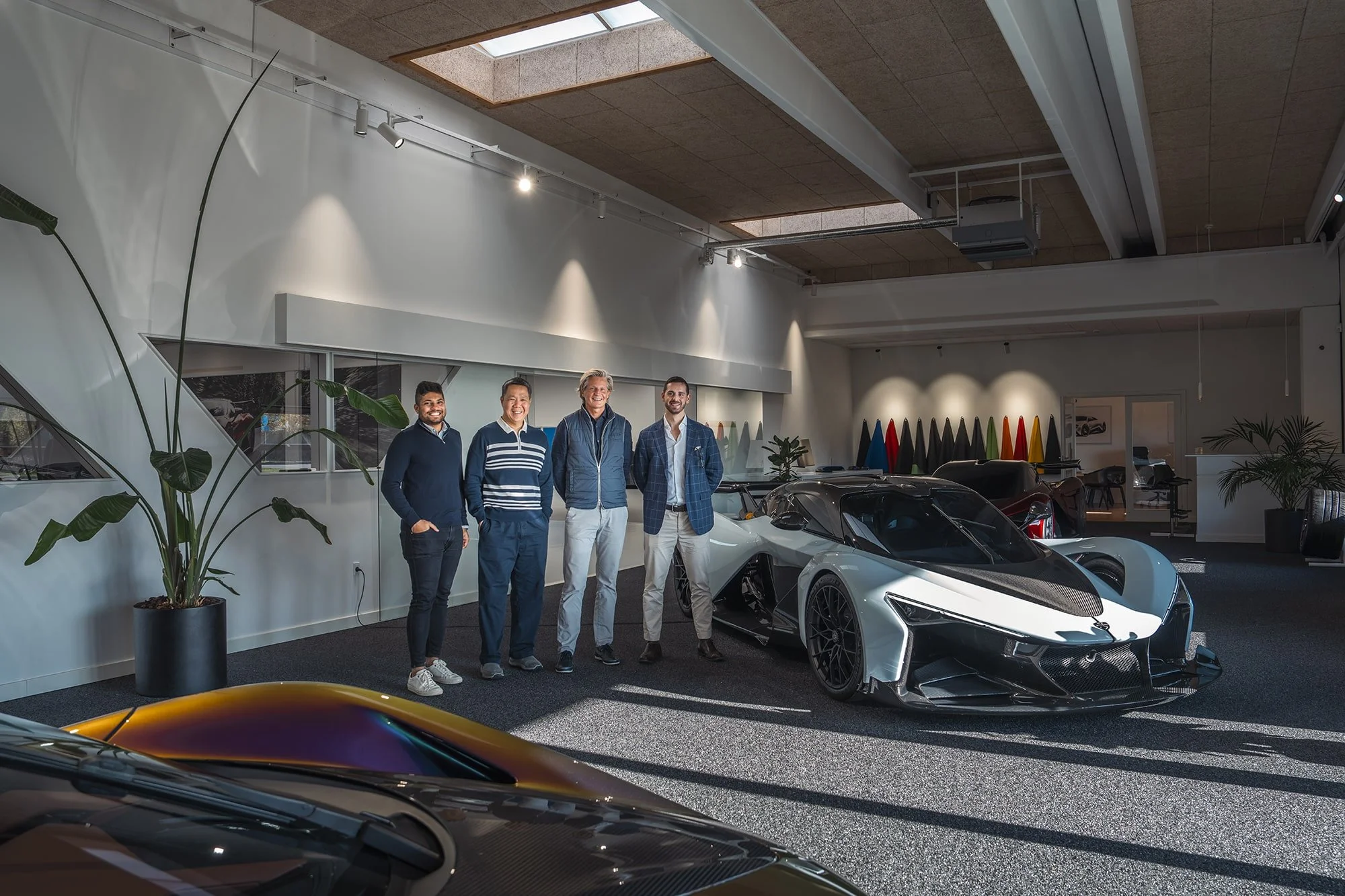
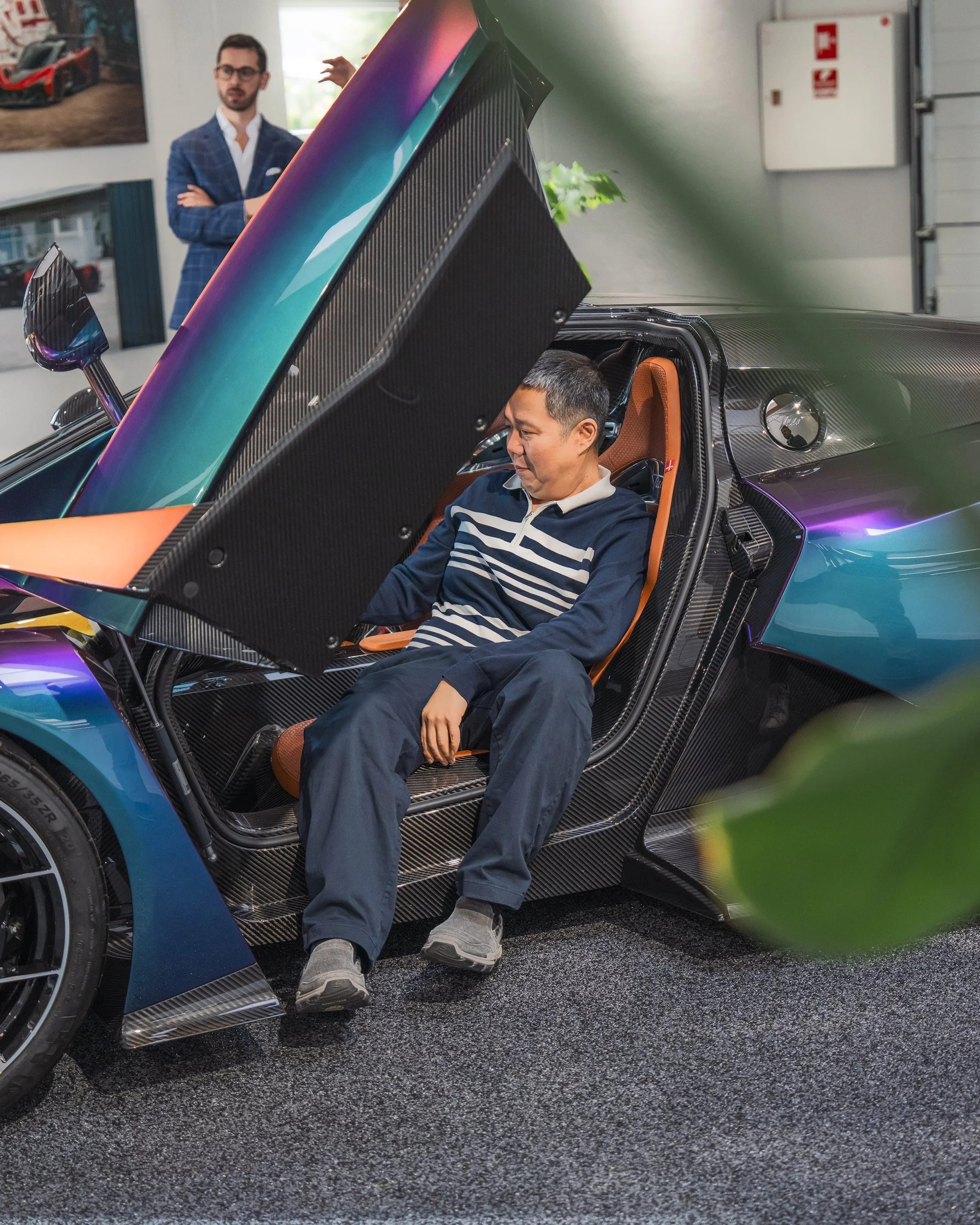
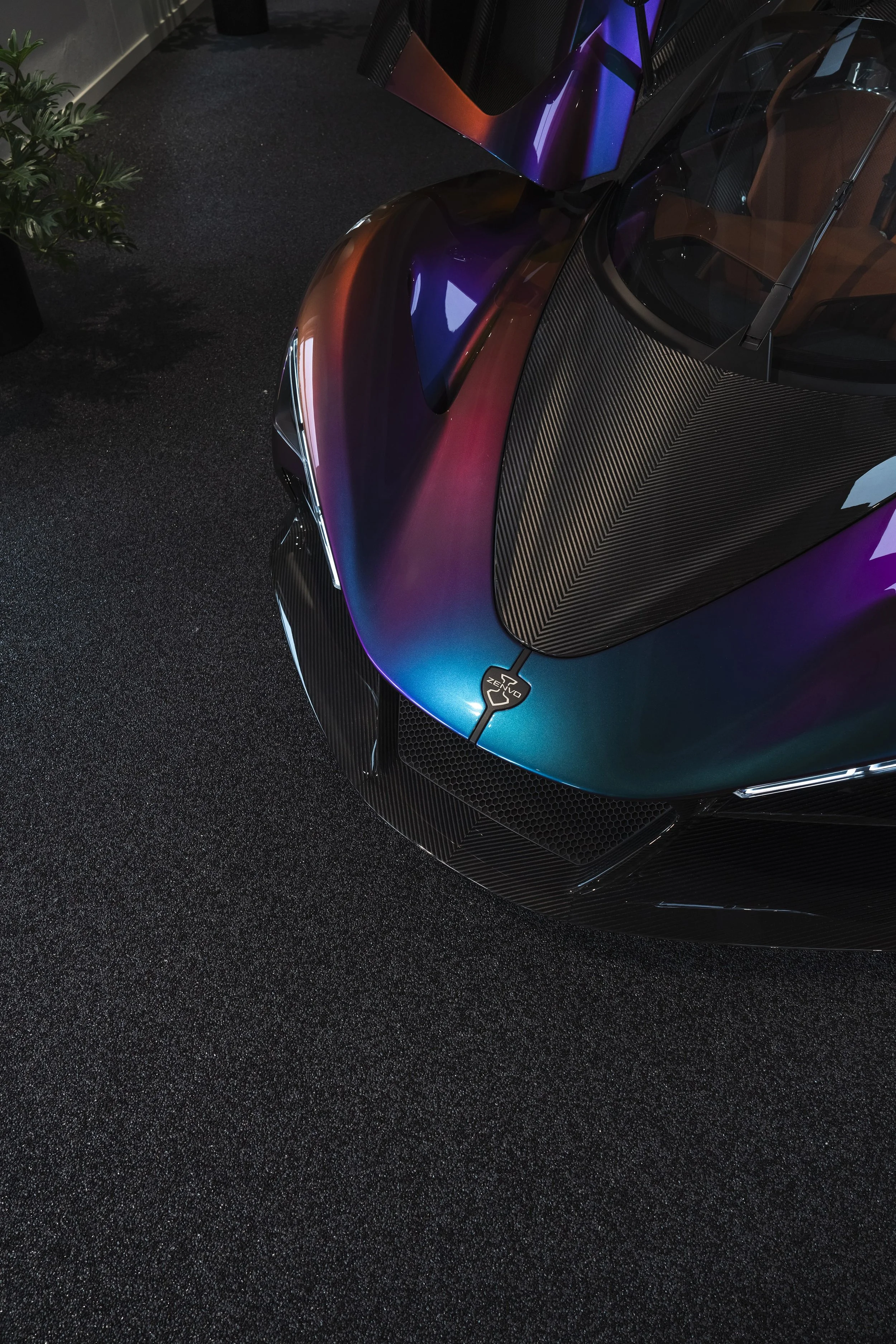
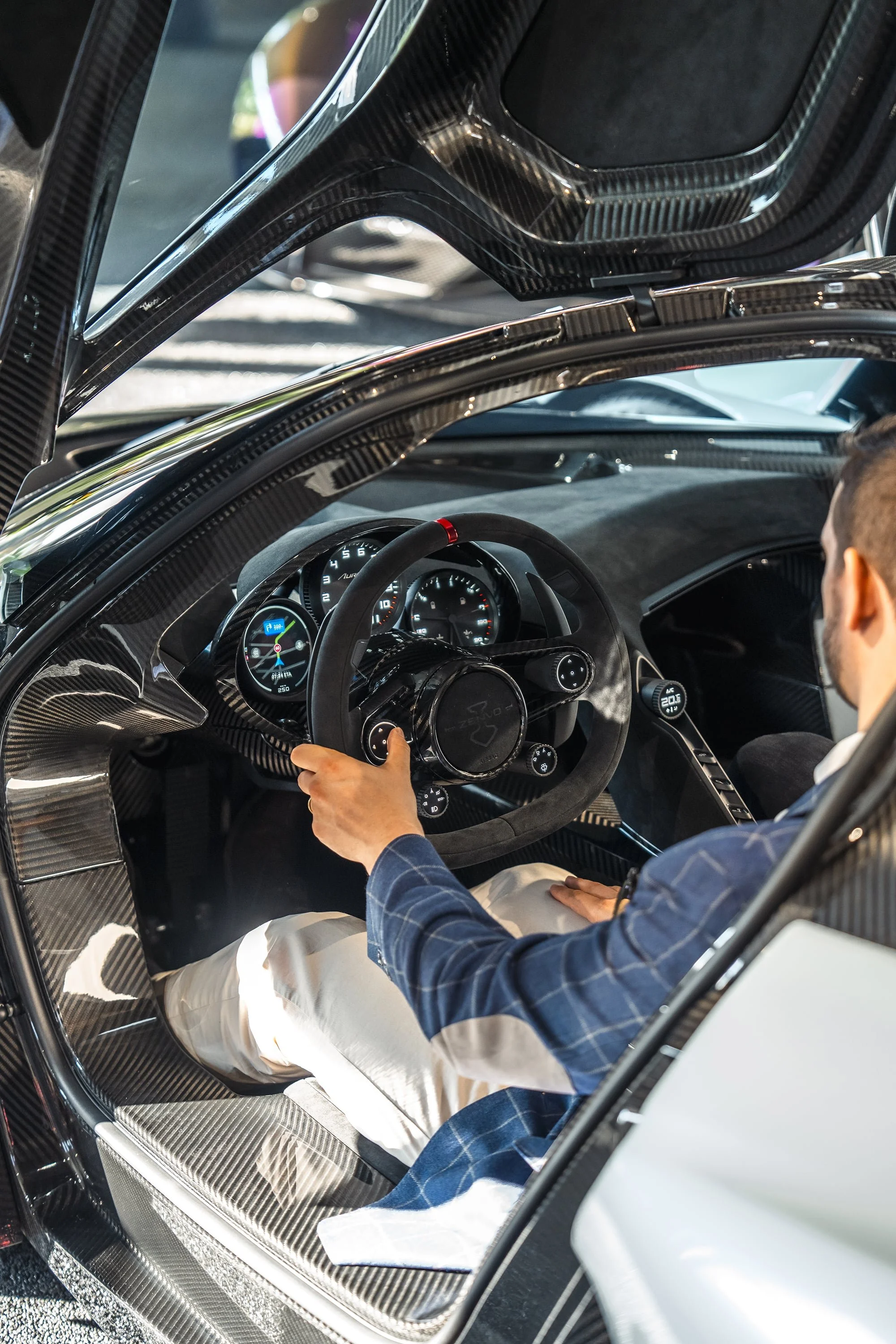
Image: newspress.uk
From a design and usability standpoint, the Aurora is built to combine raw performance with practicality. Unlike many boutique hypercars that sacrifice drivability for speed, Zenvo’s angle is to deliver a hypercar that can handle real-world conditions while still offering extreme power and engagement. The hybrid system should grant instant torque and flexibility, the V12 revs promise that visceral engine note so many hypercar purists crave, and regulatory compliance ensures that the car is more than a track toy — it's a high-performance road machine.
In the broader 2026 hypercar context, Aurora’s arrival is significant because it restores balance: until now, the trend has been strong toward electric or hybrid megacars — but core-enthusiasts, especially those who value the V12 experience, have had fewer options. With Aurora, Zenvo aims to serve exactly that market: drivers and collectors who want a modern hypercar, unrestricted by track-only status, yet offering traditional supercar DNA.
If Zenvo keeps its course, by the end of 2026 the Aurora will not just be another entry — it will be the most powerful production V12 hypercar available, competing directly with electric, hybrid, and combustion rivals alike. For anyone tracking the 2026 hypercar wave, the Aurora deserves a top-slot on the watch list.
Affiliate Disclosure
Own Time. Own Precision.
Experience the legendary Chronograph 1 in a new dimension.
This Porsche Design wall clock brings the iconic dashboard-inspired look into your home, crafted with Swiss accuracy and unmistakable motorsport DNA. A bold statement piece for collectors, enthusiasts, and anyone who lives by precision.
Disclosure: Some of the links on this website are affiliate links. This means that if you click on one of these links and make a purchase, we may earn a small commission at no extra cost to you.
We only recommend products and services that we trust or that are directly relevant to our content. Affiliate earnings help us keep this platform independent and of high quality.